

Branding vs Brand Strategy: The Difference Most People Miss

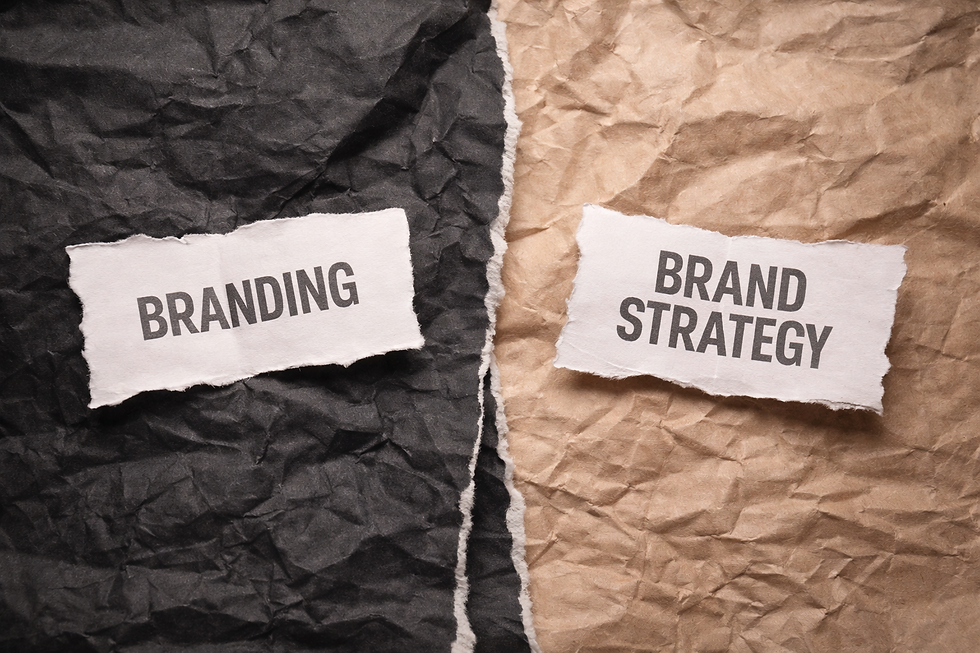
Most organizations invest heavily in what can be seen—logos, color palettes, websites, and visual systems—while skipping the deeper work that gives those elements meaning. When that happens, brands may look polished, but they struggle to move people, align teams, or sustain momentum.
The result is a brand that exists, but doesn’t truly work.
What branding actually does
Branding is the outward expression of a brand. It shapes first impressions and influences how an organization is perceived at a glance. In practice, branding typically includes:
Logos
Color palettes
Typography
Visual assets
Website design
These elements matter. They help people recognize you, remember you, and differentiate you at the surface level. But branding answers only one question: What does this look like?
Without deeper direction, branding becomes decorative. It can be attractive—even compelling—while still being disconnected from purpose, audience, and outcomes.
What brand strategy does beneath the surface
Brand strategy is the internal logic that governs every external decision. It clarifies who a brand is for, what problem it exists to solve, and why it should matter beyond a single interaction.
Strategy defines the audience, purpose, differentiation, values, and voice that guide how an organization shows up across platforms and moments. Where branding is expressive, strategy is directive. It doesn’t just describe the brand—it actively shapes behavior, decisions, and priorities.
Why branding without strategy eventually breaks down
When branding isn’t grounded in strategy, the issues aren’t always immediate—but they are inevitable. Over time, organizations begin to notice patterns that feel frustrating but hard to diagnose:
Messaging feels inconsistent across channels
Marketing efforts lack focus or cohesion
Internal teams interpret the brand differently
Visual refreshes become frequent and expensive
The brand may look better with each iteration, but performance remains flat. Engagement stalls. Growth feels harder than it should. At this point, many organizations assume they need another rebrand, when what they actually need is clarity.
A real-world example: clarity before expression
When organizations like The Counter Narrative Project (CNP) came to us, the challenge wasn’t a lack of values or meaningful work. CNP already had a visible presence and a strong mission. What they needed was strategic alignment—clearer articulation of how their story, programs, and voice worked together across advocacy, media, education, and fundraising.
Before touching visuals, we focused on defining core narratives, clarifying distinct audiences, and establishing consistent language that could flex without fragmenting. This created shared understanding internally and made creative and communications decisions more intentional.
The result wasn’t just a stronger brand—it was a brand better equipped to scale its impact without losing coherence or integrity.
How strategy creates alignment and momentum
Strong brand strategy aligns leadership, marketing, communications, and creative teams around a shared understanding of the work. It gives organizations a common language and a set of principles that guide decision-making over time.
When strategy is clear, design becomes easier because it has direction. Content becomes more focused because it serves a defined purpose. Growth becomes intentional rather than reactive, and teams spend less time debating preferences and more time building toward shared goals.
Strategy doesn’t constrain creativity—it gives it something solid to stand on.
The takeaway
Branding makes you recognizable. Brand strategy makes you memorable, trusted, and effective.
If your brand feels disjointed, difficult to maintain, or underperforming despite strong visuals, the solution isn’t another logo or redesign. It’s a stronger foundation—one that ensures everything you build is connected, intentional, and capable of lasting.

Comments